Open the apps and websites of Australia's best-known fashion brands side by side and a pattern shows up fast. The names with the biggest catalogues, the most features and the deepest pockets are usually not the ones with the best experience. The brands that lead earn it another way entirely.
When we benchmarked 82 Australian fashion and apparel brands, across apparel, designer, activewear, footwear, streetwear and multi-category, on two axes, what they have built and how well it is executed, the brand that led wasn't a global powerhouse. It was THE ICONIC, ahead of Foot Locker and David Jones.
If that surprises people, it shouldn't.
Function is not experience
Every benchmark we run separates two things that most brands treat as one: how much a brand has built, and how well the experience actually works for a shopper.
The first is function, the number of features a brand has shipped. The second is experience, the part a customer actually feels: whether the search returns the right things, the sizing is trustworthy, the checkout doesn't stumble, the return is painless. Function is what a brand can do. Experience is how well it is actually done, and it is the half that separates the field.
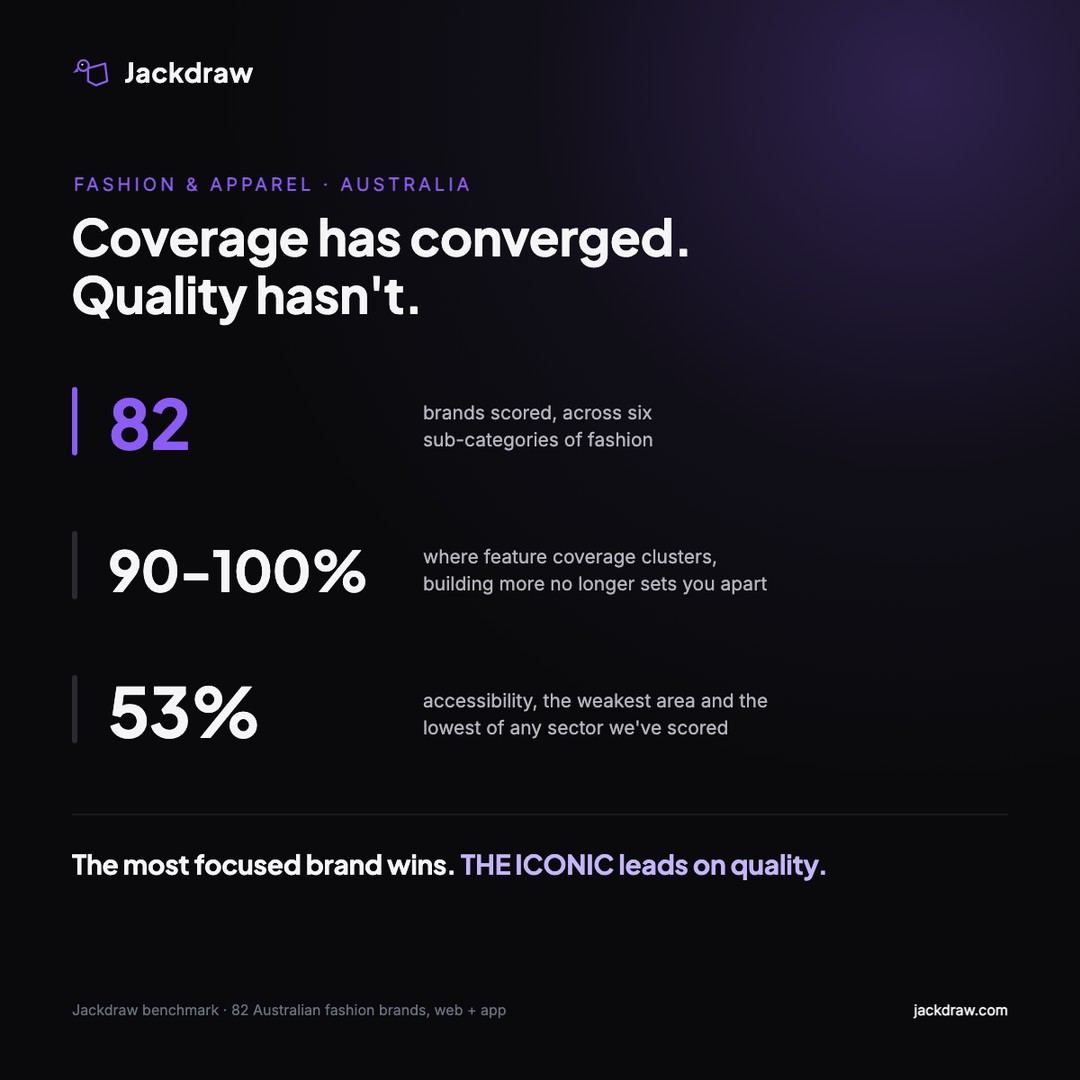
On function, fashion bunches tightly at the top. Search and filters, saved bags, wish lists, buy-now-pay-later, an app, a loyalty program, size guides, free returns: nearly everyone has ticked the boxes. Having the features is no longer the achievement it once was. It is table stakes.
On experience, the field spreads wide. Same features, very different experiences. This is where the winners separate, and it has almost nothing to do with size. THE ICONIC leads by being strong on both at once: it has built a lot, and it has made all of it genuinely good to use. The separation comes not from how much a brand builds, but from how well it finishes what it builds.
A focused site beats a sprawling one
The clearest lesson in the fashion data is that scale can work against you.
The global giants carry enormous catalogues and long feature lists. But a huge range only helps if a shopper can move through it easily, and scale makes that harder: more to search, more to filter, more to keep consistent. That is why several of the largest global names sit mid-table on experience, while a focused local player, doing fewer things and doing each one well, can lead the field.
A focused site that does fewer things, and does each one well, tends to beat a broad one trying to do everything at once. In fashion, tight beats big.
Where fashion is actually won
So if the feature list is settled, where does a fashion brand actually compete now? In the details shoppers feel.
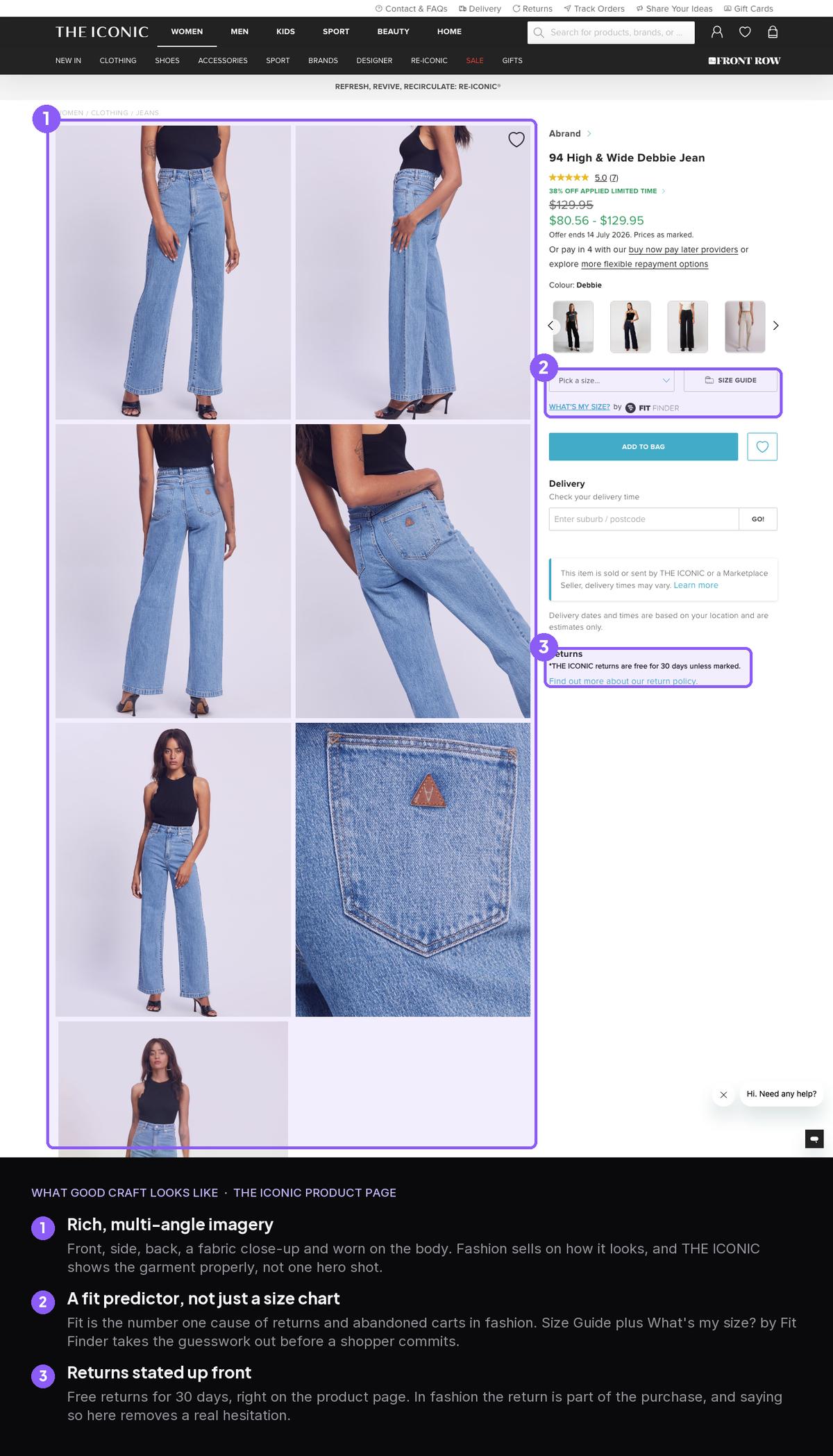
Fit and sizing. The single biggest source of doubt, returns and abandoned carts in fashion. Real sizing guidance, fit reviews and consistent measurements do more for conversion than another feature ever will.
Showing the product properly. Video, user-generated content, 360 and AR still have low adoption, and they are exactly where the product page is heading. The next advantage is showing the garment better, not adding another badge to it.
The returns journey. In fashion, returns are not an edge case, they are part of the purchase. A return that is clear, quick and trackable is the difference between a one-time buyer and a repeat one.
The app. Loyalty and repeat purchase increasingly live in the app, and app experience splits the field hard. The brands that treat the app as a first-class product, not an afterthought, are the ones that pull ahead.
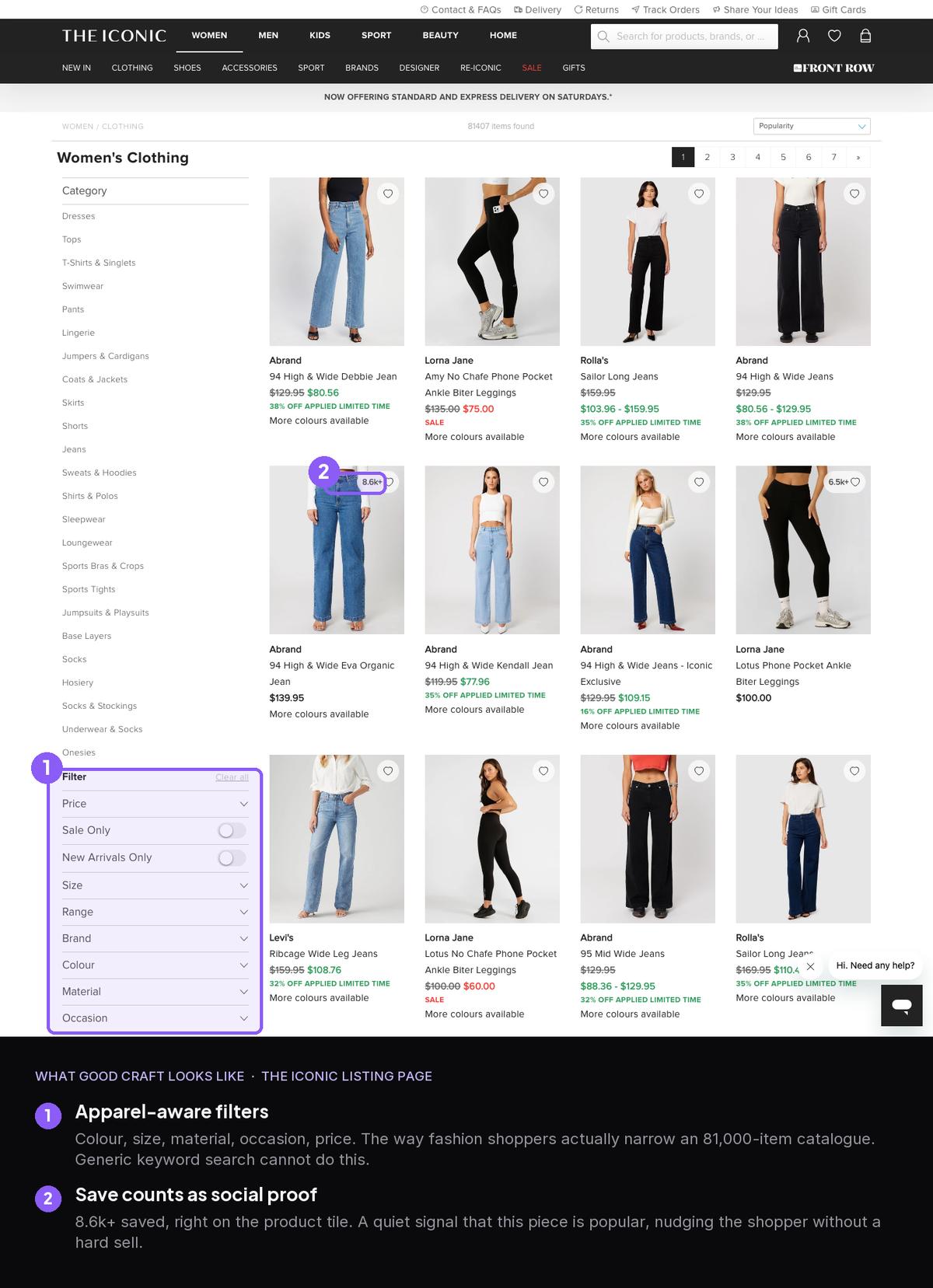
Search and filter that understand apparel. Colour, fit, occasion, fabric, length. Generic search treats a dress like a drill bit. Fashion shoppers browse differently, and the sites that respect that keep them longer.
None of these are new features to build. They are the features brands have already shipped, done to a high standard. That is the whole opportunity.
The weakest link is the same everywhere
There is one finding I can't write about fashion without naming. Accessibility is the sector's weakest area, at 51 percent, the lowest of any industry we have audited, super and general retail included.
That matters for three reasons. It is a large, underserved audience: around one in five people live with a disability, before you count ageing and the situational impairments we all hit. It is now a legal risk: the EU Accessibility Act has been in force since June 2025 and applies to any brand selling to EU customers, which includes a great many Australian fashion labels shipping offshore. And it is, quietly, just better design. The structure that makes a site work for a screen reader, clean labels, a logical order, real focus states, is the same structure that makes it faster for everyone else.
Fashion, of all sectors, sells itself on how things look and feel. Accessibility is where the experience most often stops working, and almost nobody is treating it as the differentiator it now is.
Compete in your category, not the whole field
One caution on the leaderboard. It flatters breadth. THE ICONIC leads a benchmark that spans six sub-categories, from designer to streetwear to activewear, and your shoppers don't compare you to all of it.
They compare you to your direct peers. A streetwear label is judged against other streetwear, an activewear brand against other activewear, on the things that category's shoppers care about. Read your category league, not just the overall table, and win the comparison your customers are actually making.
The bottom line
For years the fashion digital race was about building more: more features, bigger catalogues, another integration. That race is largely over, and the biggest names finished it without pulling ahead on the thing that counts.
What sets a fashion brand apart now is the experience itself. Whether the fit is trustworthy, the product is shown well, the return is painless, and every shopper, including the one in five, can actually use it. The brand with the most features is rarely the one with the best experience. THE ICONIC didn't win by having the most. It won by executing what it has.
Features are table stakes. The experience is the moat. Because the details others miss are where the experience actually lives.
See where your brand really ranks
The Australian Fashion & Apparel benchmark scores 82 brands on what they've built and how well it's executed, across web and app, against 13 established UX frameworks.
Browse the benchmarks →Source: Jackdraw's benchmark of 82 Australian fashion and apparel brands across web and app, scored on function and experience against 13 UX frameworks. Accessibility figure: 51% for fashion, the lowest of any sector audited.
Michelle Sawyer is the founder of Jackdraw, which publishes independent customer experience benchmarks of Australian industries.